_edited.png)




Everything taken care of, End to End.
This Itinerary Begins
With You
At Conte, no two itineraries are the same. Share what matters to you when you travel - your preferences and pace - and we’ll craft a journey that reflects you completely. Thoughtfully designed, expertly delivered, and entirely yours.
NEPAL
Itinerary Overview
Days 1 - 3
Pokhara Unveiled
Days 4 - 7
BEST TIME
BEST TIME
TAILORED TRIPS
BEST TIME
Days 8 - 12
A Local's Goodbye
Exploring the Land
Highlights of Your Journey
Days 1 - 3
Across three days in Pokhara, experience the essential mix of mountain sunrises, cultural sites, and lakeside relaxation that has made this Nepal's most popular destination since tourism began developing in the 1960s.
Begin in Pokhara with the classic combination of Phewa Lake boat rides and mountain-view dinners, understanding that this valley served as a crucial stop on the ancient salt and wool trade route between Tibet and India for over 500 years. Catch the famous sunrise from Sarangkot, originally built as a fortress by King Prithvi Narayan Shah during his 18th-century campaign to unite Nepal, before exploring the World Peace Pagoda, one of 80 such structures built worldwide by the Japanese Nipponzan Myohoji organization. Round out the start of your trip with visits to Devi's Fall and Gupteshwor Cave - limestone formations created millions of years ago when this region lay beneath the Tethys Sea - and the International Mountain Museum, which showcases how Nepal transformed from a closed kingdom to the world's premier mountaineering destination.
Days 4 - 7
From mountain village treks to historic hilltop towns, days four through seven take you deeper into Nepal's traditional culture and stunning mountain landscapes, following ancient paths used by traders and pilgrims for centuries.
Head into the Annapurna foothills for day hikes or overnight stays in villages like Dhampus and Australian Camp, where traditional stone houses reflect building techniques passed down through generations of Gurung and Magar communities who have inhabited these slopes since at least the 12th century. These ethnic groups, renowned for their service as Gurkha soldiers in British and Indian armies since 1815, maintain their distinct languages and customs while adapting to modern trekking tourism. Continue with short treks to Ghandruk or Landruk, established settlements that showcase traditional architecture and terraced farming methods developed over centuries to maximize crop yields on steep mountain terrain.
Return to Pokhara for lakeside relaxation or spa treatments before driving to Bandipur, founded in the early 19th century by Newar traders. The town's well-preserved Newari architecture, with its distinctive carved wooden windows and pagoda-style temples, represents one of Nepal's finest examples of medieval urban planning, while explorations of Siddha Gufa - discovered only in 1991 despite being one of Nepal's largest caves - reveal the geological processes that shaped the Mahabharat range.
Days 8 - 12
From Bandipur's mountain vistas to Kathmandu's sacred temples, your final days cover Nepal's cultural heartland through ancient architecture, religious sites, and vibrant markets that reflect the country's position at the crossroads of Hindu and Buddhist civilizations.
Leave Bandipur's hilltop charm and return to Kathmandu Valley, a UNESCO World Heritage site that has been continuously inhabited for over 2,000 years and served as the political and cultural center of Nepal since the Licchavi period (400-750 CE). Start with Thamel, the former hippie haven of the 1960s now transformed into Nepal's tourist hub, and the peaceful Garden of Dreams, built in 1920 during the Rana period when Nepal's prime ministers ruled as virtual monarchs.
Spend your remaining days exploring Nepal's most important cultural sites, beginning with Swayambhunath, the 2,500-year-old "Monkey Temple" that predates the arrival of Buddhism in the valley. Continue to Patan Durbar Square, the former royal palace of the Malla kings, whose artistic patronage created some of the finest examples of Newar craftsmanship in wood, stone, and metal that you see today. Visit the Hindu temple complex at Pashupatinath, established in the 5th century and considered one of the most sacred Shiva sites in the world. Complete your cultural immersion in medieval Bhaktapur, the best-preserved of the three ancient kingdoms that once ruled the valley, and the massive Boudhanath Stupa, before ending with final shopping and café time in Kathmandu's friendly streets.


Day 1
Across three days in Pokhara, experience the essential mix of mountain sunrises, cultural sites, and lakeside relaxation that has made this Nepal's most popular destination since tourism began developing in the 1960s.
Begin in Pokhara with the classic combination of Phewa Lake boat rides and mountain-view dinners, understanding that this valley served as a crucial stop on the ancient salt and wool trade route between Tibet and India for over 500 years. Catch the famous sunrise from Sarangkot, originally built as a fortress by King Prithvi Narayan Shah during his 18th-century campaign to unite Nepal, before exploring the World Peace Pagoda, one of 80 such structures built worldwide by the Japanese Nipponzan Myohoji organization. Round out the start of your trip with visits to Devi's Fall and Gupteshwor Cave - limestone formations created millions of years ago when this region lay beneath the Tethys Sea - and the International Mountain Museum, which showcases how Nepal transformed from a closed kingdom to the world's premier mountaineering destination.
Days 2 - 4
From mountain village treks to historic hilltop towns, days four through seven take you deeper into Nepal's traditional culture and stunning mountain landscapes, following ancient paths used by traders and pilgrims for centuries.
Head into the Annapurna foothills for day hikes or overnight stays in villages like Dhampus and Australian Camp, where traditional stone houses reflect building techniques passed down through generations of Gurung and Magar communities who have inhabited these slopes since at least the 12th century. These ethnic groups, renowned for their service as Gurkha soldiers in British and Indian armies since 1815, maintain their distinct languages and customs while adapting to modern trekking tourism. Continue with short treks to Ghandruk or Landruk, established settlements that showcase traditional architecture and terraced farming methods developed over centuries to maximize crop yields on steep mountain terrain.
Return to Pokhara for lakeside relaxation or spa treatments before driving to Bandipur, founded in the early 19th century by Newar traders. The town's well-preserved Newari architecture, with its distinctive carved wooden windows and pagoda-style temples, represents one of Nepal's finest examples of medieval urban planning, while explorations of Siddha Gufa - discovered only in 1991 despite being one of Nepal's largest caves - reveal the geological processes that shaped the Mahabharat range.
Days 5 - 6
From Bandipur's mountain vistas to Kathmandu's sacred temples, your final days cover Nepal's cultural heartland through ancient architecture, religious sites, and vibrant markets that reflect the country's position at the crossroads of Hindu and Buddhist civilizations.
Leave Bandipur's hilltop charm and return to Kathmandu Valley, a UNESCO World Heritage site that has been continuously inhabited for over 2,000 years and served as the political and cultural center of Nepal since the Licchavi period (400-750 CE). Start with Thamel, the former hippie haven of the 1960s now transformed into Nepal's tourist hub, and the peaceful Garden of Dreams, built in 1920 during the Rana period when Nepal's prime ministers ruled as virtual monarchs.
Spend your remaining days exploring Nepal's most important cultural sites, beginning with Swayambhunath, the 2,500-year-old "Monkey Temple" that predates the arrival of Buddhism in the valley. Continue to Patan Durbar Square, the former royal palace of the Malla kings, whose artistic patronage created some of the finest examples of Newar craftsmanship in wood, stone, and metal that you see today. Visit the Hindu temple complex at Pashupatinath, established in the 5th century and considered one of the most sacred Shiva sites in the world. Complete your cultural immersion in medieval Bhaktapur, the best-preserved of the three ancient kingdoms that once ruled the valley, and the massive Boudhanath Stupa, before ending with final shopping and café time in Kathmandu's friendly streets.

Days 4 - 7
From mountain village treks to historic hilltop towns, days four through seven take you deeper into Nepal's traditional culture and stunning mountain landscapes, following ancient paths used by traders and pilgrims for centuries.
Head into the Annapurna foothills for day hikes or overnight stays in villages like Dhampus and Australian Camp, where traditional stone houses reflect building techniques passed down through generations of Gurung and Magar communities who have inhabited these slopes since at least the 12th century. These ethnic groups, renowned for their service as Gurkha soldiers in British and Indian armies since 1815, maintain their distinct languages and customs while adapting to modern trekking tourism. Continue with short treks to Ghandruk or Landruk, established settlements that showcase traditional architecture and terraced farming methods developed over centuries to maximize crop yields on steep mountain terrain.
Return to Pokhara for lakeside relaxation or spa treatments before driving to Bandipur, founded in the early 19th century by Newar traders. The town's well-preserved Newari architecture, with its distinctive carved wooden windows and pagoda-style temples, represents one of Nepal's finest examples of medieval urban planning, while explorations of Siddha Gufa - discovered only in 1991 despite being one of Nepal's largest caves - reveal the geological processes that shaped the Mahabharat range.
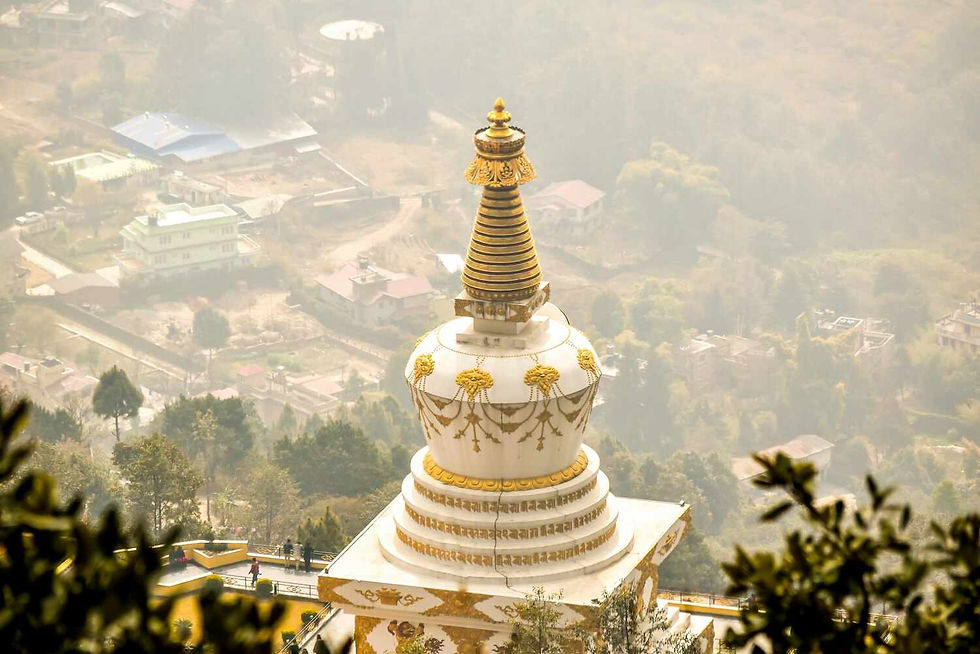
Days 8 - 12
From Bandipur's mountain vistas to Kathmandu's sacred temples, your final days cover Nepal's cultural heartland through ancient architecture, religious sites, and vibrant markets that reflect the country's position at the crossroads of Hindu and Buddhist civilizations.
Leave Bandipur's hilltop charm and return to Kathmandu Valley, a UNESCO World Heritage site that has been continuously inhabited for over 2,000 years and served as the political and cultural center of Nepal since the Licchavi period (400-750 CE). Start with Thamel, the former hippie haven of the 1960s now transformed into Nepal's tourist hub, and the peaceful Garden of Dreams, built in 1920 during the Rana period when Nepal's prime ministers ruled as virtual monarchs.
Spend your remaining days exploring Nepal's most important cultural sites, beginning with Swayambhunath, the 2,500-year-old "Monkey Temple" that predates the arrival of Buddhism in the valley. Continue to Patan Durbar Square, the former royal palace of the Malla kings, whose artistic patronage created some of the finest examples of Newar craftsmanship in wood, stone, and metal that you see today. Visit the Hindu temple complex at Pashupatinath, established in the 5th century and considered one of the most sacred Shiva sites in the world. Complete your cultural immersion in medieval Bhaktapur, the best-preserved of the three ancient kingdoms that once ruled the valley, and the massive Boudhanath Stupa, before ending with final shopping and café time in Kathmandu's friendly streets.
BEST TIME
Spring / Autumn
TAILORED TRIPS
from £2500 pp, per night
Pokhara - Annapurna Foothills - Kathmandu Valley
Days 1 - 3
Pokhara Unveiled
Days 4 - 7
Exploring the Land
Days 8 - 12
A Local's Goodbye
Trip Highlights
Days 1 - 3
Across three days in Pokhara, experience the essential mix of mountain sunrises, cultural sites, and lakeside relaxation that has made this Nepal's most popular destination since tourism began developing in the 1960s.
Begin in Pokhara with the classic combination of Phewa Lake boat rides and mountain-view dinners, understanding that this valley served as a crucial stop on the ancient salt and wool trade route between Tibet and India for over 500 years. Catch the famous sunrise from Sarangkot, originally built as a fortress by King Prithvi Narayan Shah during his 18th-century campaign to unite Nepal, before exploring the World Peace Pagoda, one of 80 such structures built worldwide by the Japanese Nipponzan Myohoji organization. Round out the start of your trip with visits to Devi's Fall and Gupteshwor Cave - limestone formations created millions of years ago when this region lay beneath the Tethys Sea - and the International Mountain Museum, which showcases how Nepal transformed from a closed kingdom to the world's premier mountaineering destination.

Days 5 - 6
Through quieter lakes and local markets, your final days in Pokhara offer a gentler pace while exploring the region's natural diversity and traditional crafts before heading back to Kathmandu.
Take a day trip to Begnas Lake, the second-largest lake in the Pokhara Valley and less touristy than Phewa, offering pristine mountain reflections and traditional fishing communities that have worked these waters for generations. Try zip-lining across the valley - Nepal's adventure tourism industry began developing in earnest after the country opened to tourism in 1951 - or kayaking on the lake's calm waters. Alternatively, book a spa afternoon featuring traditional Ayurvedic treatments that reflect Nepal's position between Indian and Tibetan healing traditions.
Spend your last morning with coffee by Phewa Lake, browsing the local shops that have evolved from the old Tibet-India trading route, searching for Tibetan singing bowls crafted by refugee communities who arrived after 1959, hand-woven pashminas from the high-altitude regions, and modern trekking gear that represents Nepal's evolution into a major adventure destination, before catching your flight or starting the scenic drive back to Kathmandu through landscapes that have remained largely unchanged since the medieval period.
Days 2 - 4
From sunrise viewpoints to paragliding adventures, days two through four combine Pokhara's best outdoor activities with cultural sites and natural attractions, following in the footsteps of mountaineers who have used this valley as their base camp since the 1950s.
Start early with the drive to Sarangkot, established as a fort by the Shah dynasty in the 18th century and now famous for sunrise views over the Himalayas - the sight of Machapuchare and the Annapurna range at dawn is worth the early wake-up call. The Annapurna massif, first climbed by Maurice Herzog's French expedition in 1950, towers over the valley and provides the backdrop for Pokhara's thriving adventure tourism industry. Spend your afternoon paragliding over the valley or visit the World Peace Pagoda, built in 1999 by Japanese Buddhist monks as part of their global peace initiative.
Take a day to trek to Australian Camp or Dhampus, a traditional Gurung village where you'll encounter the indigenous people who have served as high-altitude guides and Gurkha soldiers for over 200 years. Return to explore Devi's Fall, named after a Swiss woman who tragically fell into the waterfall in 1961, and the connected Gupteshwor Cave, a limestone formation sacred to Lord Shiva, before finishing with the International Mountain Museum, which chronicles Nepal's climbing history from the first Everest expeditions to modern mountaineering achievements.
Days 5 - 6
Through quieter lakes and local markets, your final days in Pokhara offer a gentler pace while exploring the region's natural diversity and traditional crafts before heading back to Kathmandu.
Take a day trip to Begnas Lake, the second-largest lake in the Pokhara Valley and less touristy than Phewa, offering pristine mountain reflections and traditional fishing communities that have worked these waters for generations. Try zip-lining across the valley - Nepal's adventure tourism industry began developing in earnest after the country opened to tourism in 1951 - or kayaking on the lake's calm waters. Alternatively, book a spa afternoon featuring traditional Ayurvedic treatments that reflect Nepal's position between Indian and Tibetan healing traditions.
Spend your last morning with coffee by Phewa Lake, browsing the local shops that have evolved from the old Tibet-India trading route, searching for Tibetan singing bowls crafted by refugee communities who arrived after 1959, hand-woven pashminas from the high-altitude regions, and modern trekking gear that represents Nepal's evolution into a major adventure destination, before catching your flight or starting the scenic drive back to Kathmandu through landscapes that have remained largely unchanged since the medieval period.
Days 4 - 7
From mountain village treks to historic hilltop towns, days four through seven take you deeper into Nepal's traditional culture and stunning mountain landscapes, following ancient paths used by traders and pilgrims for centuries.
Head into the Annapurna foothills for day hikes or overnight stays in villages like Dhampus and Australian Camp, where traditional stone houses reflect building techniques passed down through generations of Gurung and Magar communities who have inhabited these slopes since at least the 12th century. These ethnic groups, renowned for their service as Gurkha soldiers in British and Indian armies since 1815, maintain their distinct languages and customs while adapting to modern trekking tourism. Continue with short treks to Ghandruk or Landruk, established settlements that showcase traditional architecture and terraced farming methods developed over centuries to maximize crop yields on steep mountain terrain.
Return to Pokhara for lakeside relaxation or spa treatments before driving to Bandipur, founded in the early 19th century by Newar traders. The town's well-preserved Newari architecture, with its distinctive carved wooden windows and pagoda-style temples, represents one of Nepal's finest examples of medieval urban planning, while explorations of Siddha Gufa - discovered only in 1991 despite being one of Nepal's largest caves - reveal the geological processes that shaped the Mahabharat range.
Days 8 - 12
From Bandipur's mountain vistas to Kathmandu's sacred temples, your final days cover Nepal's cultural heartland through ancient architecture, religious sites, and vibrant markets that reflect the country's position at the crossroads of Hindu and Buddhist civilizations.
Leave Bandipur's hilltop charm and return to Kathmandu Valley, a UNESCO World Heritage site that has been continuously inhabited for over 2,000 years and served as the political and cultural center of Nepal since the Licchavi period (400-750 CE). Start with Thamel, the former hippie haven of the 1960s now transformed into Nepal's tourist hub, and the peaceful Garden of Dreams, built in 1920 during the Rana period when Nepal's prime ministers ruled as virtual monarchs.
Spend your remaining days exploring Nepal's most important cultural sites, beginning with Swayambhunath, the 2,500-year-old "Monkey Temple" that predates the arrival of Buddhism in the valley. Continue to Patan Durbar Square, the former royal palace of the Malla kings, whose artistic patronage created some of the finest examples of Newar craftsmanship in wood, stone, and metal that you see today. Visit the Hindu temple complex at Pashupatinath, established in the 5th century and considered one of the most sacred Shiva sites in the world. Complete your cultural immersion in medieval Bhaktapur, the best-preserved of the three ancient kingdoms that once ruled the valley, and the massive Boudhanath Stupa, before ending with final shopping and café time in Kathmandu's friendly streets.
BEST TIME
Spring / Autumn
TAILORED TRIPS
from £2500 pp, per night
Pokhara - Annapurna Foothills - Kathmandu Valley
Days 1 - 3
Pokhara Unveiled
Days 4 - 7
Exploring the Land
Days 8 - 12
A Local's Goodbye
Trip Highlights
Days 1 - 3
Across three days in Pokhara, experience the essential mix of mountain sunrises, cultural sites, and lakeside relaxation that has made this Nepal's most popular destination since tourism began developing in the 1960s.
Begin in Pokhara with the classic combination of Phewa Lake boat rides and mountain-view dinners, understanding that this valley served as a crucial stop on the ancient salt and wool trade route between Tibet and India for over 500 years. Catch the famous sunrise from Sarangkot, originally built as a fortress by King Prithvi Narayan Shah during his 18th-century campaign to unite Nepal, before exploring the World Peace Pagoda, one of 80 such structures built worldwide by the Japanese Nipponzan Myohoji organization. Round out the start of your trip with visits to Devi's Fall and Gupteshwor Cave - limestone formations created millions of years ago when this region lay beneath the Tethys Sea - and the International Mountain Museum, which showcases how Nepal transformed from a closed kingdom to the world's premier mountaineering destination.
Days 2 - 4
From sunrise viewpoints to paragliding adventures, days two through four combine Pokhara's best outdoor activities with cultural sites and natural attractions, following in the footsteps of mountaineers who have used this valley as their base camp since the 1950s.
Start early with the drive to Sarangkot, established as a fort by the Shah dynasty in the 18th century and now famous for sunrise views over the Himalayas - the sight of Machapuchare and the Annapurna range at dawn is worth the early wake-up call. The Annapurna massif, first climbed by Maurice Herzog's French expedition in 1950, towers over the valley and provides the backdrop for Pokhara's thriving adventure tourism industry. Spend your afternoon paragliding over the valley or visit the World Peace Pagoda, built in 1999 by Japanese Buddhist monks as part of their global peace initiative.
Take a day to trek to Australian Camp or Dhampus, a traditional Gurung village where you'll encounter the indigenous people who have served as high-altitude guides and Gurkha soldiers for over 200 years. Return to explore Devi's Fall, named after a Swiss woman who tragically fell into the waterfall in 1961, and the connected Gupteshwor Cave, a limestone formation sacred to Lord Shiva, before finishing with the International Mountain Museum, which chronicles Nepal's climbing history from the first Everest expeditions to modern mountaineering achievements.
Best Luxury Hotels in Nepal: Conte's Seasonal Picks for 2025
Barahi Jungle Lodge
Chitwan National Park, Nepal
Nestled on the banks of the Rapti River in Meghauli, just opposite Chitwan National Park, Barahi Jungle Lodge is a luxury wildlife-resort set within 12 hectares of lush jungle reconstructed from once-barren grassland. The resort features thatched-roof cottages and suites - a mix of traditional style and modern comfort - with private balconies overlooking river and forest.
Guests can relax by a stone-paved infinity pool that opens to a view of the river and jungle beyond, or visit the full-service spa for massage and wellness treatments. The lodge arranges safari experiences; jeep drives, boat trips, jungle walks into Chitwan National Park, where rhinos, tigers, elephants and 500+ bird species roam. True to its eco-ethos, Barahi supports local communities and conservation (including planting thousands of trees) and aims to balance luxury with responsible travel.


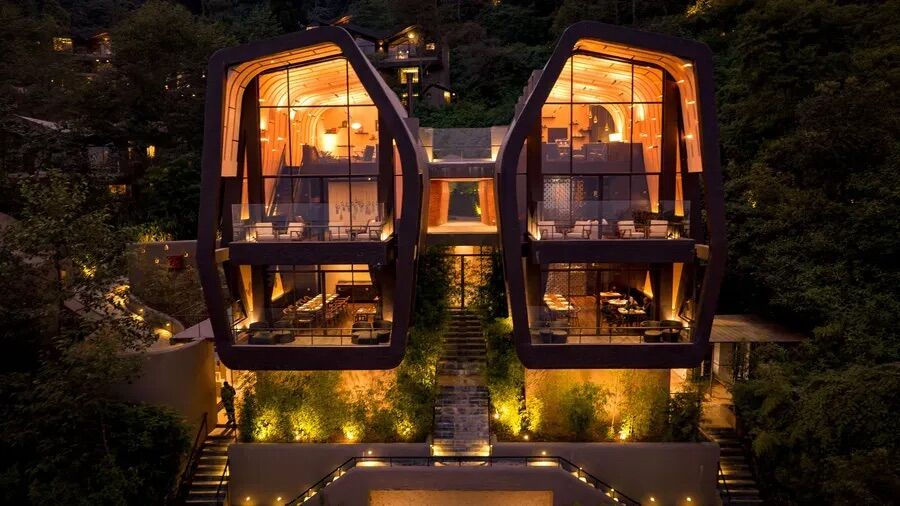
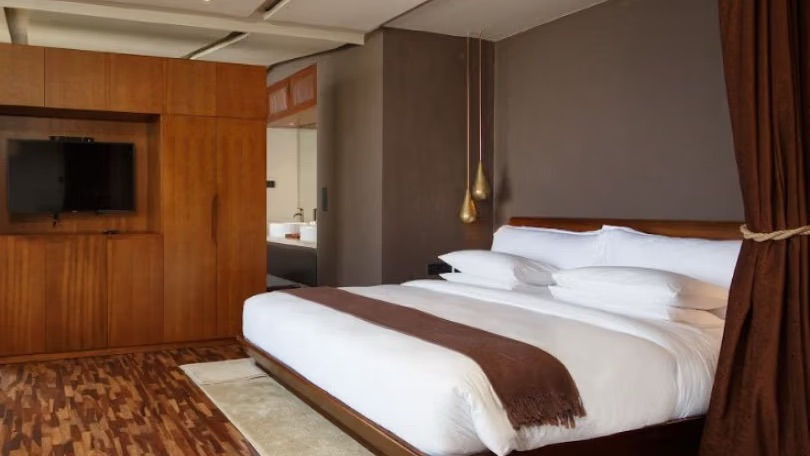
Kavya Himalayas
Nagarkot, Nepal
Set high above the Kathmandu Valley in the hillside village of Nagarkot, Kavya Himalayas offers a luxe retreat immersed in Himalayan vistas. Perched at approximately 2,175 metres in altitude, this resort delivers sweeping panoramas of mountain ridges and valley fog, making it a standout among wellness-driven mountain properties. Accommodation at Kavya revolves around suites and villas - currently 24 keys with expansion underway - designed to blend seamlessly into the terrain using local stone, wood and copper finishes.
The emphasis is firmly on holistic renewal: yoga and meditation sessions in forested gardens, Ayurvedic spa treatments, guided hikes and mountain-bike adventures all complement the quiet luxury of your stay. Sustainability is woven into the fabric of the resort, from terraced construction that preserves the hillside to organic gardens, electric vehicles on-site and water-management systems.


Dwarika's Sanctuary
Dhulikhel, Nepal
Set on a hillside above the Kathmandu Valley in Dhulikhel, Nepal, Dwarika's Sanctuary is an all-suite sanctuary blending thoughtful luxury with Himalayan serenity. The resort features approximately 39 spacious suites spread across terraced buildings constructed in traditional Newari style using natural materials like wood, stone and local textiles.
Wellness is at the heart of the experience here. The property offers yoga decks, a Himalayan salt-room, chakra sound-chambers and a holistic spa grounded in Vedic and Buddhist traditions. Dining is equally elevated; meals are prepared with ingredients sourced from the resort’s organic gardens and menus reflect both Himalayan and Japanese Zen vegetarian influences.


Tiger Mountain Pokhara Lodge
Pokhara, Nepal
Tiger Mountain Pokhara Lodge is a serene and eco-friendly retreat nestled on a ridge overlooking the majestic Annapurna range in Nepal. Just outside Pokhara, the lodge offers breathtaking mountain views, tranquil gardens, and traditional stone cottages that blend harmoniously with the natural surroundings.
Known for its commitment to sustainability and community, Tiger Mountain provides an intimate experience with personalized service, guided nature walks, birdwatching, and wellness offerings like yoga and massage. With no TVs or distractions, the focus is on reconnecting with nature, self, and local culture. It's a peaceful haven for reflection, exploration, and Himalayan beauty.


Dwarika's Hotel
Kathmandu Nepal
Dwarika’s Hotel in Kathmandu, Nepal, is a luxurious heritage property that beautifully preserves traditional Newari architecture and craftsmanship. Blending cultural authenticity with modern comfort, the hotel features intricately carved wooden structures, antique artifacts, and serene courtyards. Each room is uniquely designed to reflect Nepal’s rich artistic heritage, offering a peaceful and elegant retreat.
With its award-winning service, holistic spa, and gourmet dining rooted in Nepali tradition, Dwarika’s provides an immersive experience that connects guests to the spirit and history of the Himalayas. It is more than a hotel - it's a celebration of Nepalese culture, history, and hospitality.


Shinta Mani Mustang
Jomsom, Nepal
Shinta Mani Mustang – A Bensley Collection is a luxury boutique hotel nestled in the majestic Himalayas of Nepal. Blending modern comfort with traditional Tibetan-inspired architecture, it offers breathtaking views of the Annapurna and Nilgiri mountain ranges. With just 29 thoughtfully designed suites, the hotel provides an exclusive, tranquil escape.
Guests enjoy personalised service, wellness experiences, cultural excursions, and gourmet cuisine using locally sourced ingredients. Sustainability and community support are central to its ethos. Perfect for adventurers and seekers of serenity, Shinta Mani Mustang redefines high-altitude hospitality with elegance, authenticity, and a deep connection to the land and people.


